National Mourning and the Loudest Silence in Football History
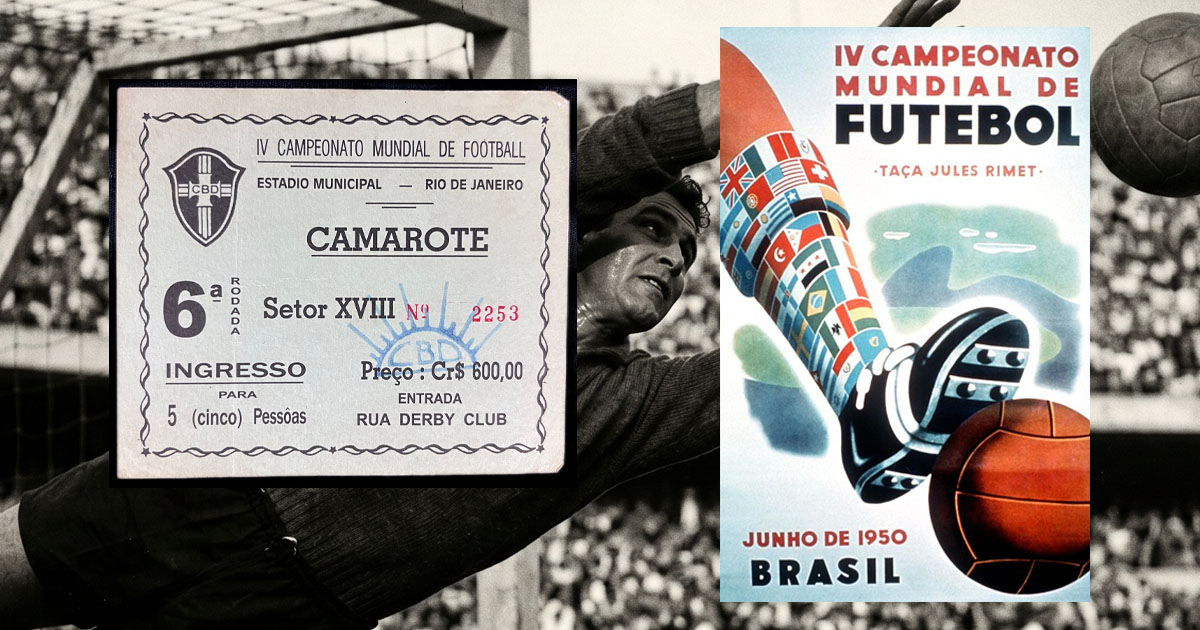
The FIFA World Cup in Brazil was first global football tournament after a twelve-year hiatus caused by the Second World War. In 1950, football was not yet a tool of high-stakes geopolitics; instead, it served as long-awaited proof of a return to civilian life.
The tournament went down in history for its bizarre format—the only one without a traditional final—as well as mass withdrawals and the construction of a colossal stadium designed to be a monument to triumph, which instead became a national mausoleum.
1. The ineligible accountant and the collapse of English snobbery
The England national team, finally deigning to participate in a World Cup for the first time, arrived in Brazil as heavy favourites. However, on June 29 in Belo Horizonte, the greatest upset in the sport's history occurred: the "Kings of Football" fell 1-0 to the United States. The decisive goal in the 37th minute was scored by Joe Gaetjens, a Haitian immigrant who had moved to New York on a scholarship to study accounting. The irony was palpable: Gaetjens didn't even hold American citizenship—he had merely signed a declaration of intent to obtain it.
When the teletype message "England - USA 0-1" reached London newsrooms, editors laughed it off. Convinced it was a typo, they simply added a '1' in front of the zero, reporting a 10-1 victory for the Three Lions...
📆 #OTD in 1950:
— U.S. Soccer Men's National Team (@USMNT) June 29, 2022
🇺🇸 USA 1 - 0 ENG 🏴
Joe Gaetjens' lone goal lifts the #USMNT to victory over England at the 1950 @FIFAWorldCup in Brazil. pic.twitter.com/z9xQKLF3sz
2. Saving Nike in a shoebox
The World Cup trophy might never have made it to Brazil at all were it not for the nerves of steel shown by FIFA Vice-President Ottorino Barassi. During the war, as the Nazis confiscated valuables across Europe, the Italian official secretly removed the solid gold "Goddess of Victory" statuette from a Rome bank where it had been stored since Italy’s 1938 win. Barassi hid the trophy in a battered shoebox and shoved it deep under his bed.
When patrols searched his home, it never occurred to them that the most coveted symbol in world sport was stashed in such a mundane container. Had it not been for this act, Jules Rimet might have been forced to present the 1950 winners with a replica of the original trophy—a prize that would later endure a history fraught with real-life heists.
3. The Indian boycott: Finance over tradition
For a long time, legend had it that India skipped the 1950 World Cup because FIFA banned them from playing barefoot. However, archival documents suggest more practical reasons. The All India Football Federation at the time viewed the World Cup as secondary to the Olympic Games and simply couldn't find the funds for the flight across the Atlantic.
Inside the FIFA offices, officials were in despair. The withdrawal of India—alongside Scotland and Turkey—left Group 4 with only two participants: Uruguay and Bolivia. This turned the group stage into a farce; to reach the final round, the Uruguayans only had to win a single match.
4. Flavio Costa’s regional prejudices
In the match against Switzerland, Brazil coach Flavio Costa made a decision dictated by fear rather than tactics. Because the game was played in São Paulo, Costa was terrified that the local crowd would jeer players from Rio de Janeiro. Consequently, he replaced his entire midfield with players from local São Paulo clubs.
The plan backfired spectacularly. Brazil stumbled to a 2-2 draw, barely coping with Swiss counter-attacks. The coach was forced to hastily recall his star players, later admitting that trying to appease local fans at the expense of squad cohesion nearly cost them their place in the final pool.
At the 1950 @FIFAWorldCup Final @Uruguay provided one of the biggest upsets in football history by beating Brazil in the Maracanã 😯🇺🇾
— FIFA Museum (@FIFAMuseum) April 14, 2020
Schubert Gambetta, who would have turned 100 today, was part of this momentous occasion, and his medal is now on display at the FIFA Museum🥇🤩 pic.twitter.com/HWAvaNJa9x
5. The "Maracanazo": The sound of silence
The deciding match against Uruguay drew a record-shattering 200,000 spectators to the Maracanã. Brazil needed only a draw to secure the title, and the country was already in full party mode; the Mayor of Rio publicly congratulated the team two hours before kick-off. But Alcides Ghiggia’s 79th-minute goal plunged the stadium into a state Jules Rimet described as the most terrifying silence he had ever experienced.
The only sounds were the sobs of grown men and the rustle of flags being thrown onto the concrete in rage. At 17:45, English referee George Reader blew for full-time, signaling the start of a period of national mourning. A wave of suicides followed across Brazil, claiming over three hundred lives. Football proved it was no longer just a game, but a catalyst for collective madness.
The Aftermath
The 1950 World Cup demonstrated that football had become ingrained in the cultural DNA of nations. Even back then, one could apply the famous mantra: "Don't look for logic in football." How else to explain Brazil's attacking juggernaut shattering against Uruguay's disciplined pragmatism, or English arrogance falling victim to an amateur accountant?
For those interested in the cold hard facts—results, stats, and tables—visit our dedicated 1950 FIFA World Cup archive page. It’s a fascinating journey!
