Green Shirts and Grain Bribes: 5 Untold Stories from the 1978 World Cup
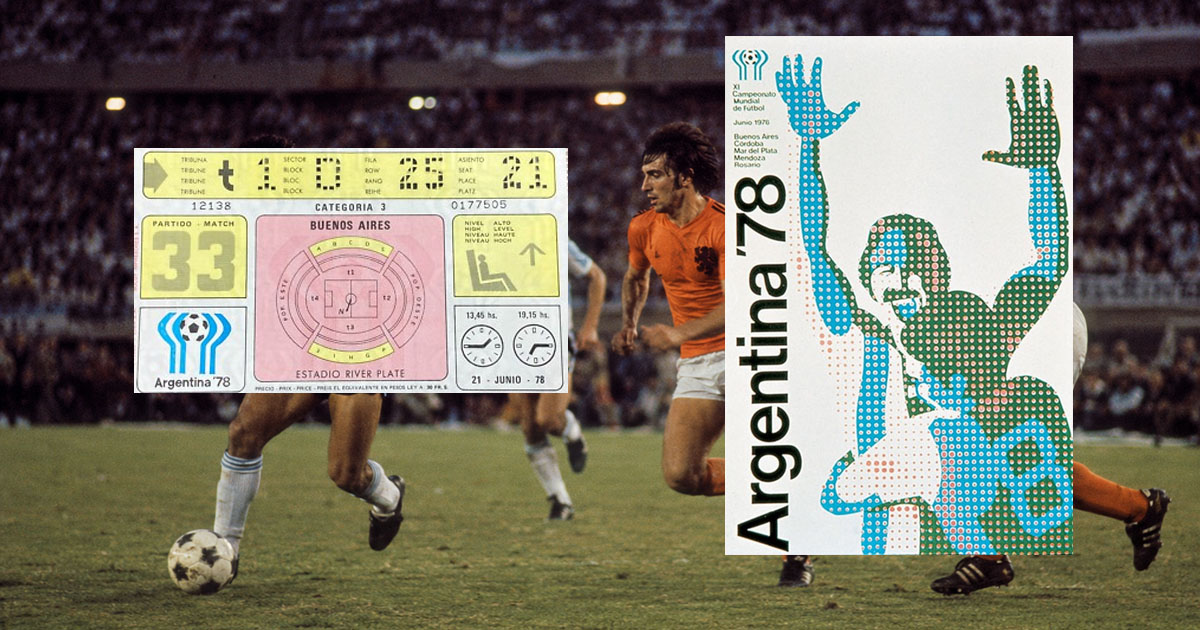
Diego Maradona was deemed too raw to feature for the hosts at the 1978 World Cup. In hindsight, that might have been a blessing. The tournament in Argentina remains one of the most politically charged and controversial spectacles in football history.
While it birthed a first-time champion in La Albiceleste, the hosts’ path to the trophy was marred by backroom deals, military intervention, and bizarre administrative blunders. Terrikon.com takes a deep dive into five of the craziest, lesser-known stories from that infamous summer.
1. Les Bleus’ Green Mask: The Mar del Plata Kit Crisis
On 9 June, France and Hungary played out a chaotic group-stage clash that belonged in a comedy of errors. Months prior, FIFA ordered Hungary to wear red and France white. However, a late April directive flipped the script: France in blue, Hungary in white. Henri Patrelle, an official with the French Football Federation, tossed the memo aside without reading it.
With black-and-white television sets still dominating global living rooms, FIFA strictly enforced dark-versus-light kit match-ups. When both teams emerged in white, a crisis unfolded: France’s blue kit was sitting in a storage room in Buenos Aires, 400 kilometres away.
Local club Atletico Kimberley saved the day, loaning Les Bleus their green-and-white striped shirts. To make matters worse, there weren't enough shirts to go around, and numbers had to be hastily ironed on in the dressing room. Due to the shortage, squad number 12, Claude Papi, started in the number 10 shirt, while substitute Bernard Lacombe wore a number 2 shirt paired with his standard number 17 shorts.
2. Jacek Gmoch’s Tech Revolution Sparks Star Revolt
Long before Moneyball, data analytics, or modern xG metrics, Poland manager Jacek Gmoch attempted a radical marriage of football and science. Having co-authored a thesis on optimizing football performance back in 1971, Gmoch brought an entire entourage of doctors, biologists, and computer programmers to Argentina.
During training, players were fitted with early biometric sensors monitoring heart rates, blood pressure, and lactic acid levels. The raw data was fed into a primitive mainframe computer to generate a mathematical model of the "perfect team."
However, Poland’s golden generation revolted. Icons like Grzegorz Lato, Kazimierz Deyna, and Andrzej Szarmach fiercely opposed the methods, accusing Gmoch of trying to trap a beautiful, living game inside a soulless algorithm. While Poland topped their initial group, the computer failed to program a way past Argentina and Brazil in the second phase.
3. "The Book" Strikes: Clive Thomas and the Blown Whistle
Welsh referee Clive Thomas was nicknamed "The Book" in English football due to his pedantic, borderline absurd adherence to the laws of the game. His defining World Cup moment came during a tense group stage match between Brazil and Sweden.
In the dying seconds, Brazil won a corner. As Nelinho prepared to cross, Polish linesman Alojzy Jarguz signaled that the ball needed repositioning. Those lost seconds proved decisive. When Nelinho finally swung the ball into the box, Thomas blew the final whistle while the ball was mid-air, turning away from the play.
A split second later, Zico powered a header into the net. Brazil celebrated, but Thomas was unmoved. His justification?
"Zico was late. Perhaps by only forty-hundredths of a second, but the law is the law."
4. Six Goals Priced in Wheat: The Midnight Train to Lima
The darkest shadow over the tournament remains Argentina's second-round thrashing of Peru. To edge out rivals Brazil on goal difference and reach the final, Argentina needed to win by at least four clear goals. They ran out 6-0 winners.
Suspicion immediately fell on the Peruvians, particularly their goalkeeper Ramón Quiroga—who happened to be Argentine-born. Rumours of a $250,000 bribe circulated, and British investigative journalist David Yallop later alleged a fix orchestrated by Argentine dictator Jorge Videla in his book How They Stole the Game.
The terrifying truth emerged years later. Juan Alemann, Argentina’s former Treasury Secretary, admitted that cargo ships loaded with hundreds of thousands of tons of grain were dispatched to Peru immediately after the match under the guise of "humanitarian aid"—despite Peru suffering no natural disasters at the time. Historians later argued that the match and the grain shipments were coordinated by the military dictatorships of both nations under Operation Condor, a brutal, cross-border campaign to eliminate left-wing political dissidents.
#OnThisDay in 1978, Argentina lifted their first-ever FIFA World Cup at the Estadio Monumental in Buenos Aires. 🇦🇷
— FIFA (@FIFAcom) June 25, 2024
This was the last @FIFAWorldCup to feature 16 teams before the tournament was expanded to 24 teams in 1982 🙌 pic.twitter.com/ohY1sutMVa
5. Mind Games and Plaster Casts: Final Drama
The final between Argentina and the Netherlands was delayed by calculated, psychological gamesmanship from the hosts. First, the Dutch team bus was routed on a lengthy detour through the congested streets of Buenos Aires. Then, they were forced to wait on the pitch under the deafening boos of 80,000 local fans while the hosts lingered in the tunnel.
When Argentina finally emerged, captain Daniel Passarella launched a furious protest to Italian referee Sergio Gonella, pointing at the arm of Dutch winger René van de Kerkhof. Van de Kerkhof had broken his forearm earlier in the tournament and had played subsequent matches wearing a lightweight orthopaedic plaster cast.
The cast had been fully cleared by FIFA’s medical committee, but Passarella argued it posed a physical danger to his players. As the referee wavered, Dutch manager Ernst Happel threatened to pull his team off the pitch entirely. Kick-off was delayed by ten minutes until medical staff wrapped the cast in thick foam padding and bandages, securing a psychological edge for the hosts before a ball was even kicked.
For Argentina, the end justified the means, laying the foundation for Argentina’s future status as one of world football’s great powers. Stay tuned to Terrikon.com as our World Cup retrospective heads to Spain 1982—featuring a controversial redraw, an infamous pitch invasion by a Kuwaiti Sheikh, and the tournament's first-ever penalty shootout.

