The Lamine Yamal Phenomenon: Why Age No Longer Matters
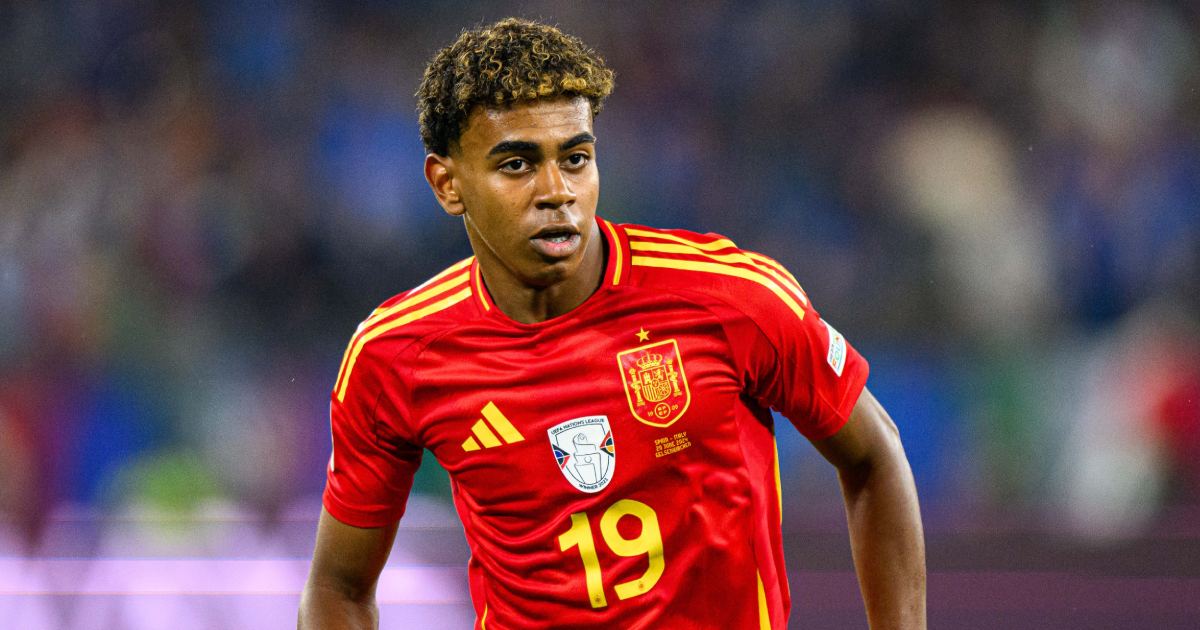
Photo by vitaliivitleo - Depositphotos
If you take football seriously, you are almost certainly well-versed in the story of a 17-year-old Pelé at the 1958 World Cup. Back then, spectators in Sweden had little idea they were witnessing the dawn of the King of Football.
Yet, a decade or two ago, a 17-year-old footballer was still coddled as a "promising academy graduate." Today, that label is no longer enough. The modern game demands that teenagers provide more than just brief flashes of brilliance; they are expected to deliver relentless consistency at elite club level and shoulder the burden of deciding monumental matches. Barcelona’s Lamine Yamal is the definitive emblem of this new footballing reality.
Even in an era defined by accelerated development, Yamal’s trajectory is unprecedented. He made his senior debut for Barcelona at just 15, and by 17, he was operating as the creative heartbeat of Spain's triumphant Euro 2024 campaign. As the 2026 World Cup gets underway, he approaches the tournament not as a prodigy to be protected, but as an established world-class asset—and, according to Transfermarkt, the most valuable player in La Liga.
Vanguard of the New Generation
Following his meteoric rise at Euro 2024—where the footballing world marvelled at a schoolboy balancing international tournament knockouts with high-school chemistry homework—sceptics questioned whether Yamal was a fleeting comet destined to burn out. The domestic campaign emphatically put those doubts to bed, solidifying his status as a bona fide superstar.
His tactical profile is frighteningly complete: devastating dribbling in isolated 1v1 situations, a unique capacity to make unconventional, high-speed decisions in the final third, and an ice-cold composure rarely seen in veterans twice his age. Crucially, he delivers this on a weekly basis.
The stakes this summer could not be higher. Should Spain justify their pre-tournament billing and capture the World Cup trophy, Yamal would put himself in pole position for the Ballon d'Or. He would also become the youngest winner in the history of the award. For context, the Brazilian icon Ronaldo won his first Ballon d'Or at 21, while Michael Owen and Lionel Messi had to wait until they were 22.
Barcelona’s Invaluable Crown Jewel
Unsurprisingly, Yamal’s extraordinary exploits have ignited endless speculation regarding his market value. Despite the winger’s public declarations of his desire to spend his entire career in Catalonia, Europe’s state-backed giants continue to circle.
Barcelona have reportedly rebuffed offers worth around €250 million, and his current valuation has only climbed since. Yet, for the Blaugrana, Yamal's worth transcends mere accounting. The club views him as the undisputed face of their post-Messi era—a generational anchor around whom a multi-year sporting project can be constructed.
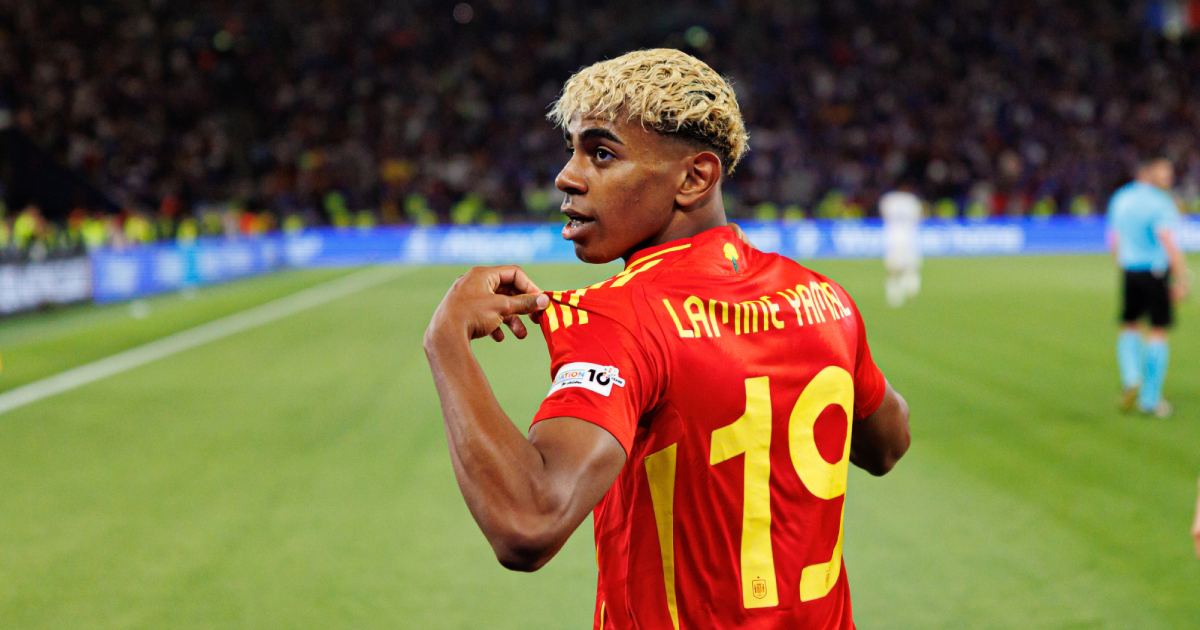
Photo by mrogowski_photography - Depositphotos
More Than an Athlete: The Symbol of Modern Spain
Yamal’s cultural significance extends far beyond his output on the pitch. When he scores, his trademark celebration involves flashing the numbers "304" with his fingers—the postal code of Rocafonda, the working-class neighborhood in Mataró where he grew up.
This gesture has evolved into a powerful cultural symbol. Born to a Moroccan father and an Equatorial Guinean mother, Yamal represents the vibrant, multicultural fabric of modern Spanish society. He stands as the face of a contemporary Spain that looks vastly different from the homogeneous squad that captured the nation's maiden World Cup in 2010.
Managing Temperament and the Spotlight
To suggest his rise has been entirely flawless would be revisionist. Navigating global superstardom at such a tender age naturally brings intense scrutiny, and parts of the Spanish media have occasionally criticised his extravagant off-pitch lifestyle, highlighting the pressures and distractions that often accompany global fame at such a young age. Defenders of the teenager rightly counter that young athletes deserve a personal life, provided it does not impact their professional obligations.
However, that fiery adolescent temperament has occasionally boiled over onto the pitch. Over the course of the domestic season, Yamal accumulated six yellow cards—the product of over-aggressive pressing in the final third and occasional emotional outbursts directed at both opponents and his own teammates. These flashes of petulance reportedly drew quiet frustration from Barcelona manager Hansi Flick, though the German tactician continues to publicly marvel at his player's raw footballing gifts.
Spain's Great Hope in the Balance
Luis de la Fuente possesses a deeply balanced and technically proficient squad featuring the likes of Nico Williams, Pedri, Gavi, and Dani Olmo. Yet, it is the Barcelona winger who remains the ultimate tactical differentiator—the one player capable of unlocking a tournament low-block with a single piece of magic.
The nation held its collective breath during the final weeks of the La Liga season when Yamal, after converting a penalty, clutched his hamstring and was forced off the pitch. While medical assessments revealed no long-term structural damage, the timing remains a massive blow: the superstar winger is expected to miss Spain's opening World Cup fixtures as a precautionary measure.
Escaping Messi's Shadow
The comparisons to Lionel Messi have been a constant shadow since Yamal’s first steps into senior football. The similarities are almost eerie: the shared La Masia education, the magical left foot, the inverted role on the right flank, and an anomalously early breakthrough.
The narrative took on an almost mythical quality recently with the resurfacing of a 2007 UNICEF charity photoshoot, which features a 20-year-old Messi bathing a baby Lamine Yamal. In Spain, this image is widely romanticised as a divine passing of the footballing torch.
"I don't want to be compared to Leo because it takes away from your own identity," Yamal recently noted. "I just want to be remembered as Lamine Yamal."
That mindset is exactly what makes him special. Rather than trying to replicate someone else’s legacy, he is busy writing his own. If he maintains his current trajectory, the footballing world is about to witness the defining career of a generation.

